
Loading the film 0%
How it works
Gas in. LNG out. On one hull.
- 01
Gas reception
Feed gas arrives by subsea pipeline; inlet treatment removes condensate and water.
- 02
Pre-treatment
Acid gas, water and mercury are removed to protect the cryogenic plant.
- 03
Liquefaction
A mixed-refrigerant cycle cools the gas to −162 °C, in modular trains.
- 04
Storage & offloading
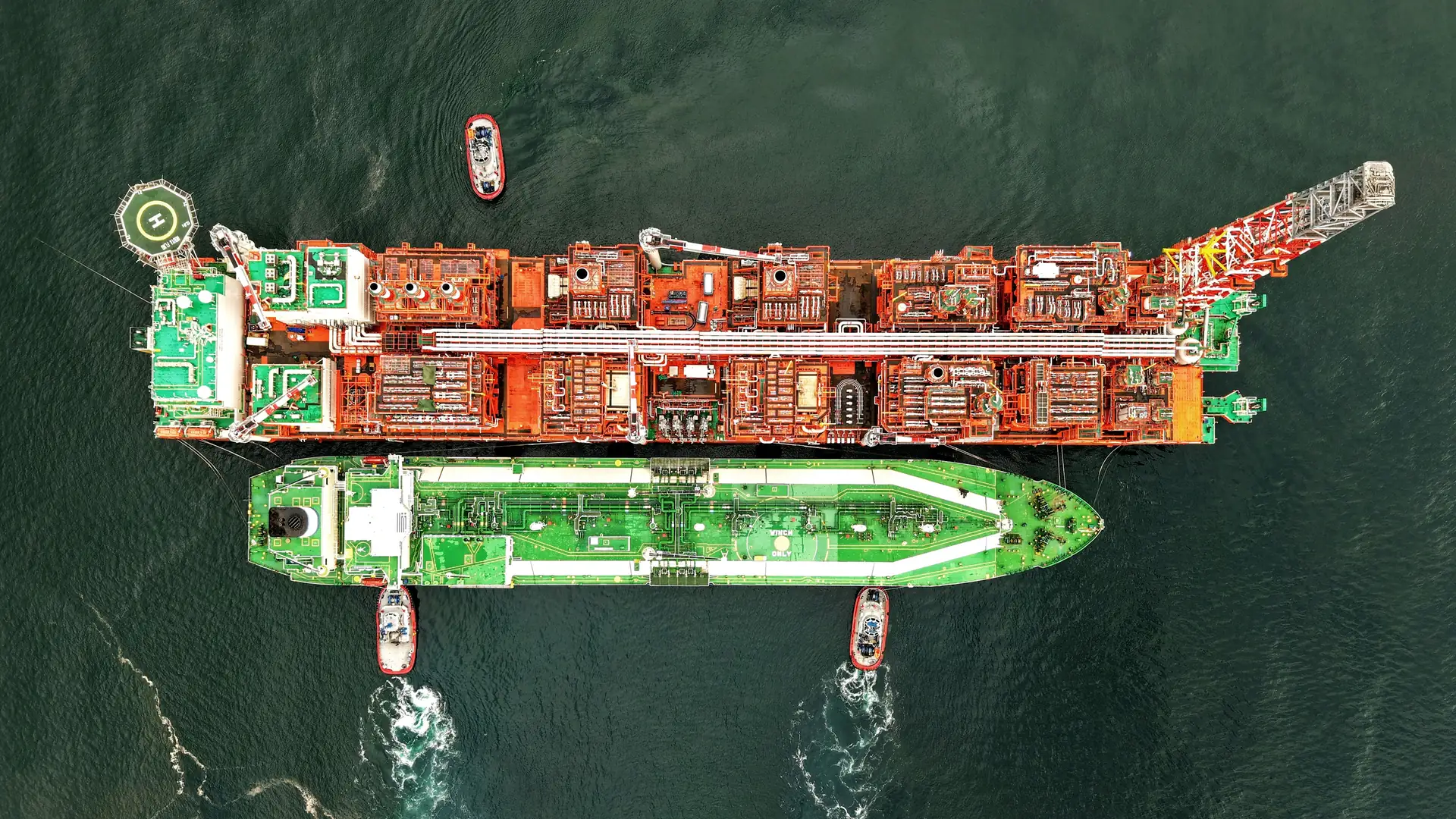
Stored on board and offloaded side-by-side to LNG carriers.
Standard design
Scale by trains, not by re-engineering.
Capacity range
- Smallest train
- 0.6MTPA
- Portfolio maximum
- 6.0MTPA
- Liquefaction
- −162°C
- SPB tank auto-welding
- 80+%
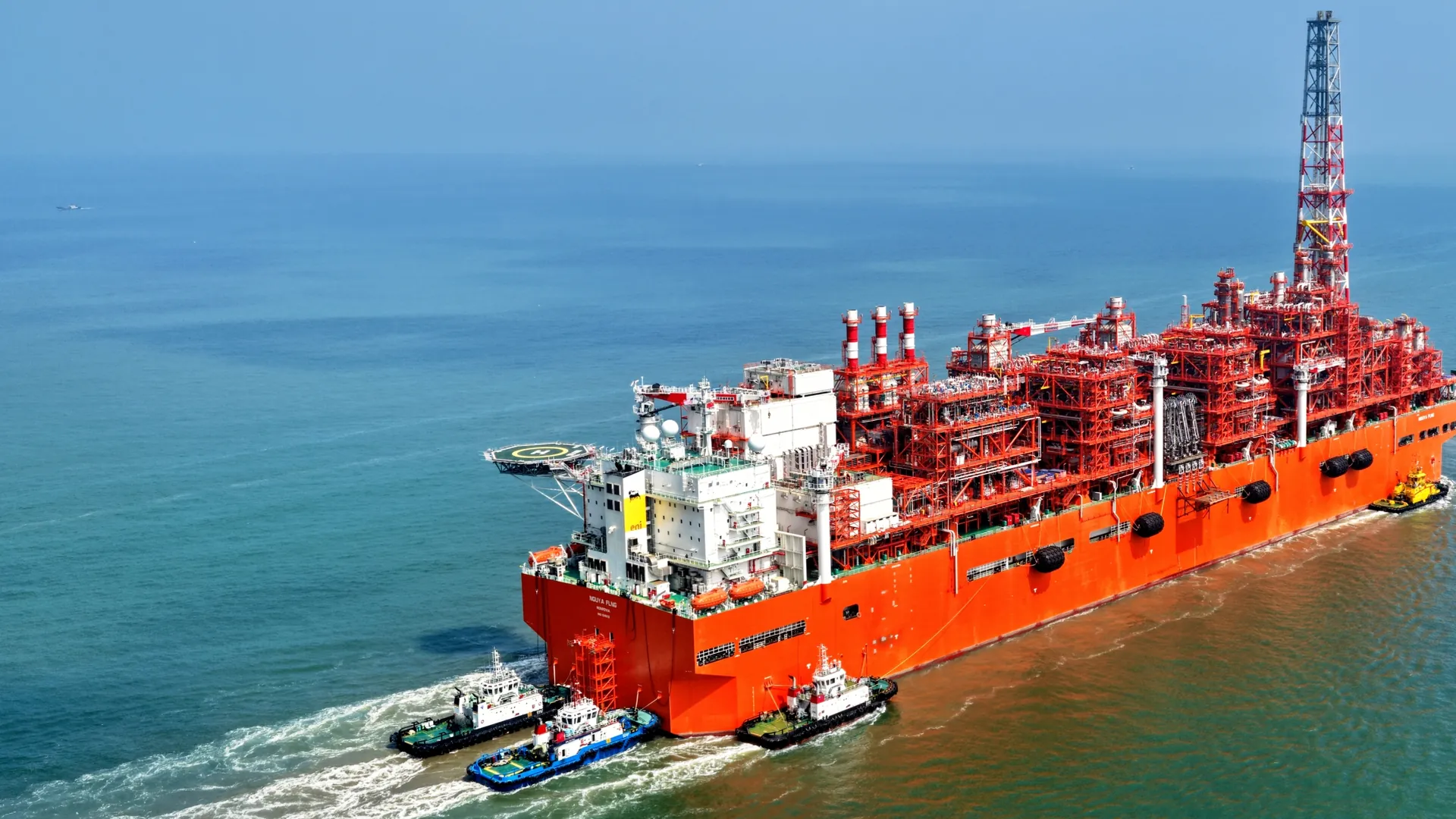
Nguya FLNG
- Annual capacity
- 2.4MTPA
- Length overall
- 376m
- First LNG
- 2026Jan
- Location
- Congo
Why Wison FLNG
Proven offshore. Standard by design.
- 01
EPCIC turnkey
Engineering to commissioning, one team — faster first LNG.
- 02
World-first barge FLNG
Tango FLNG was the first barge-type FLNG in commercial production.
- 03
Proven offshore
Nguya FLNG reached first LNG off Congo in January 2026.
- 04
Standardised & scalable
Standard hulls from 0.6 to 6.0 MTPA.
- 05
Add trains to grow
Capacity grows by adding trains, not redesigning.
- 06
Redeployable
One floating asset instead of an onshore plant.
Technology
Five train sizes. One platform.
- IPSMR liquefaction
- Shell e-DMR
- Combined-cycle power
- SPB containment
- Standardised hull
- Modular topside trains
- Side-by-side offloading
- Ship-to-ship transfer